Otherland, the book which broke me

So after hundreds if not thousands of books I have been defeated.  Otherland by Tad Williams is the first book I simply gave up on as it had no redeeming features.  It is long winded, dull and after nearly twenty percent of it I had no real idea on the plot, connection to any of the characters or any interest in finishing it.

This is a book which should appeal to me with its sci-fi and fantasy leanings, VR and a series of books rather than just one but strangely it is one which I had not heard off.  Indeed if it were not for the excellent youtube video series by JoshStifeHeyes detailing his play through of the MMO based on the book then I would probably never have heard of it and also been a few quid better off.  The video series is well worth a watch though and is far more entertaining and absorbing than the book.

So after the series I did a bit of digging and found that Otherland is actually a four book series with the first now being called City of Golden Shadow.  A quick check on the local library catalogue showed no copies (even in archive) and I could not recall ever having seen the cover in a book shop.  This in retrospect was my first red flag and was one I should have listened to; but I didn’t and eventually I found a kindle version on Amazon and gave it a go.

Now this is not the first book I have attempted by Tad Williams.  The first was one called War of the Flowers but I never had time to read it and think I sold it but I remember at the time being distinctly whelmed but that had been many many years ago (and at the time I did not recall that book) so nothing triggered in my mind. Full of hope I started and my god was it crushed quickly. How do I describe this book?  Well in truth I don’t know because after roughly twenty percent of it I have no idea on the plot.  We have Rennie trying to teach !Xibbu (and reading that spelling annoyed me more than it should have done for some reason), an inexperienced computer user whilst investigating why her brother is in some sort of coma after a VR experience. We have Orlando who is distracted by a golden vista and gets his cyber avatar killed as a result and some world war one soldier called Paul who is seemingly fighting off insanity.  Links between them? Overarching plot? Not a clue.  After literally a quarter of the novel I have no idea what links them.

On reflection I think that it is Paul’s storyline which makes things worse. Not because it is bad but because I struggled to reconcile it with a twenty first century VR based setting.  It just seems so out of place and odd.  Despite trying a few times I could not get my head around it and coupled with the long winded style of writing I quickly became bored.

I have read many challenging books with questionable narrative styles, I have read old books with archaic mannerisms and styles and none of them bored me in the way this one did. So I gave up.  I cannot tell you if the story had a great ending or if the characters actually grow in the remaining seventy five percent of the book; because the first twenty five percent was so bad that I could not even force myself to find out.  

Unless you are a fan of this author then this is the first (and hopefully last) book I would recommend you avoid even trying to find a copy of. 

Goodbye 2022. You will not be missed

So 2022 has come to an end and frankly not soon enough.  This has been an awful year for me personally what with the sudden death of my father, shocking mental health and the rising cost of living in the UK just making life feel like existence rather than living.  However there have been some successes in that I did become more regular in my blogging and I also got some stories up on my wattpad.  Small victories but you take what you can these days.  With 2023 upon us though it is time for me to consider what I want to do with this blog next year and on reflection I want to:

  • Increase the follow count a bit. The followers have grown but I would like to increase that a bit.
  • Balance the content a bit more and not be just posting book reviews. I want to hopefully get some more art, photography and gaming stuff up on there.
  • Look at doing one or two long form blogs doing a deep dive into topics that are interesting and relevant if I can find the time.

Guess I will see in a year how well I do!

Red Tides by Marc Turner – a disappointing end to a series with potential

Red tides brings the Chronicles of the Exile series to an end in a way which is disenchanting and, despite being a decent book, feels very much like the author had lost interest by the end.

As before I have not paid for this book and have instead checked it out from the local library.  I had greatly enjoyed Dragon Hunters so was quite looking forward to this one which follows on pretty much immediately from book two.  By the end though I was left feeling flat and more than a little disappointed.  The preceding two books had a clear narrative structure with a central plot with multiple spokes running to it and culminating at the end.  This one tries to do that but seems to struggle a little and in places it feels bloated and leaves so many loose ends I found myself wondering if there was a book four which I did not know about.

The story this time switches between Gilgamar and the Rubyholt Islands and has a mix of new and recurring characters.  Ebon from book one is back as is Romney.  Meanwhile Marzana, Senar Sol amongst others are carried over from book two. We also get a host of new characters but the key players are Amerel, another Guardian, and Galantas who is the son of a pirate chieftain.  The Augerans, revealed in book two, are the main antagonist and the whole story revolves around the Emperor trying to build an alliance against them, the Rubyholt Islanders trying to survive, get revenge and rich and also the Emperor trying to destroy the Augerans advanced fleet.  Spoiler alert he achieves both goals but in a rather underhand way.

The issue here is not so much what is said but what is not said. There is no real information about why the Augerans are so keen to invade.  It is suggested they are some sort of nihilistic people but this is never expanded upon and they just come across as being bad for the sake of it. As a plot device this works in an abstract sense but you never really feel much either way about them and it is part of the reason why I always dislike such absolutist motives.  Having an antagonist that is so one dimensional cuts off a lot of potential plot lines for both them and the protagonists.  It is hard to see any character growth or moral ambiguity when the only choice is kill or be killed.  This undoubtedly hurts this story for me because whilst Amerel is clearly supposed to be morally ambiguous it is hard to judge her when the Augerans just kill anyone they decide to.  

Whilst the Augerans may be one dimensional antagonists; the gods remain non dimensional irritants in this story.  The spider meddles seemingly for the sake of it but why remains a mystery. The god of the hunt from book one is mentioned in passing and whilst Shroud is used as a curse he does not feature here.  Aside from the brief corruption of Marzana elements, which are never fully explored, the gods serve as nothing more than a break in the narrative and I could not help but think the whole story would be just as good without them.  Romnay remains an interesting character but there is nothing really in her arc which could not have been done in a different way.

Senar Sol remains an interesting character but even here the divided loyalties storyline is not really played out for him.  There is an insinuation at the end that he kills the Imperial ambassador out of his own personal sense of honour and he certainly gets some impressive action scenes but there is no real conclusion to his storyline.  Indeed the only one which does get a complete payoff is the one involving the chameleon assassins and also Galantas; mainly because it is a terminal one.

All in all this is a book which on one hand is a fun read, it is exciting and has a strong mix of action and political scheming but on the other it is so frustrating because there is so much left unanswered and unfinished.  I do not know if there will ever be another book in the series but the depth of world building and the obvious solid underlying story here does deserve one to be written.  All in all I would say read this one to finish the series but do so in the knowledge that it will leave you with a lot more questions than answers.

Troll – a fun godzilla clone

Troll is what happens when you take the reboot of Godzilla, shrink it down, set it in Norway and include a chunk of scandinavian folklore. However, despite being a pretty blatant reskin of Godzilla it is surprisingly good.

I am a big fan of monster and giant mech movies.  Yes they are cheesy, CGI heavy nonsense but when you are feeling a bit blue there is nothing better.  Pacific Rim remains one of my favourite films and I have always enjoyed Godzilla so this one was always going to be a must watch for me when I saw it on a cold and grey Sunday afternoon in December.  

So the plot.  Well there is nothing particularly groundbreaking here.  We are introduced to a young girl called Nora who is climbing with her favour and we get some rather artistic mountain shots where the point of their being some truth in all fairy tales is made.  Then we have a time skip again and we see Nora is now an adult involved in a palaeontology dig.  Meanwhile a mining construction crew are blasting under a mountain and wake something up.  Said thing (spoiler a troll) goes on a bit of rampage and Nora is brought in to explain what is going on. We are introduced to the macho Captain Kris, a writer turned government adviser called Andreas and along the way we get various bits of Scandinavian folklore and how it interacted with the christianisation of the country.  Various methods are used to kill the troll including church bells, the army, an implied nuclear weapon before it is finally destroyed on the way back to its castle (under the royal palace) by a mix of UV light and sunlight.

Ok so the plot is as on rails as it is possible to get and there are more plot holes and tropes than you can shake a stick at.  Slightly crackpot father who’s proven to be right? Parental reconciliation? Implied anti-nuclear views? Discussion of good and evil? They are all here and none are subtle.  Likewise the plot holes are large enough to hide a troll.  Why is Nora picked? In the whole period why is there no sunlight at all and the less said about the plot gaps around the castle the better but it just doesn’t matter.  You don’t watch films like this for tight plot, great character growth or deep lore and meaning.  You watch them because they are fun escapes from reality and damn anything else and it is here that Troll delivers.  The CGI and design is excellent as well; not overdone or super heavy handed and the Troll design is superb with the influence of classic myth and fairy tales evident in it.  The movement looks convincing and the scale and size avoid the whole chunky Godzilla thing and there is a convincing degree of emotion in the face without the whole thing becoming over the top and excessive.  This is not a film where the CGI has been overdone which is refreshing for a monster film.

Troll is proof that a film does not have to be good to be enjoyable.  By any technical measure this is a poor film but on the most important factor; sheer enjoyability and escapism then it delivers in spades.  It is well worth watching on netflix if you want to turn off your mind for a couple of hours (and also enjoy some classic music in the credits) but just don’t go in with your expectations too high.

Dragon Hunters by Marc Turner

Dragon Hunters is proof that you can have a sword and sorcery novel containing dragons, scheming and politicking and still make it entertaining without needing to resort to Game of Thrones levels of sex and graphic violence.  It was a damned good book and my only real criticism was that some of the character arcs feel a little superfluous.

In the spirit of disclosure I will say at this point that I did not pay for this book as I picked it up from the library.  I always feel that it is important to point things like this out; call it a personal quirk.

Dragon Hunters is the second book in Marc Turner’s Chronicles of the Exile series and readers of this blog can find my review on book one.  In that I criticised the author for not really giving the characters any depth and being a little too keen to get to the next bit of action.  This made the book feel a little transient though still enjoyable.  Dragon Hunters corrects many of those flaws and was a much better read as a result.

Again we have the umbrella story structure of multiple story lines converging on the central pillar.  In this book we have a more political tale based around Imerle Polivar and her attempt to remain in power as the Emira of the Storm Isles.  Essentially the islands are ruled by a group of water mages who remain in power for a set amount of time and then have to step aside. Suffice to say Imerle is not keen on this and plans to use the forthcoming Dragon Day, a festival where a single dragon is released and hunted, to remove rivals. The strands running to it include that of Senar Sol, a guardian who was captured after being chucked through a magical portal by the Emperor from book one, a rival storm lady who wants power herself, a watchman hunting down an assassin, an assassin cult which is scheming for power and a merchant house trying to obtain recompense for a stolen cargo.  All of these end up in the same place i.e. confronting Imerle but along the way there are a host of adventures and political scheming.

So the good.  Well it is nice to see a fantasy series including a dragon but not making them the absolute focus and relying on them heavily.  It’s a refreshing change to not see the easy option being taken and instead they are just used as a plot device rather than plot crutch.  The characters are also more fleshed out and it is good to see the Guardians actually get a little bit of back story.  Senar is very different from Luker in book one, he is more of a careworn soldier than the roguish Luker and he gets a bit of backstory and character development.  The author also resists the temptation to go down the sex route though it is hinted that Marzana and the twins are both somewhat promiscuous.  Again it is refreshing to see the Game of Thrones route not being taken and there is no debauchery here.  I am not a prude but I do think Thrones overdoes it.  The story as well is excellent and I could not see any real plot holes; there is clearly a depth to the story and this time the world itself feels a little more lived in and real.  Dragon Hunters improves on book one in every way and we also now start to get a little bit of the wider back story revealed (including who the Exile the series is named for actually is).

The bad? Well I confess it was a surprise to see pretty much every character from book one dropped and gone.  It’s a bold move to take away a set of characters which people have invested time in but on balance I think the author pulls it off.  Again the story is a little too keen to get into its stride and the early chapter pacing bombards you with names, places and events without any real context. It could easily put someone off but once I had gotten things clear in my head then it was fine.  I did thing that the Argenta storyline was a bit weak and it felt like it was a little padded before petering out but I will concede that it does advance the story.

All in all this was a thoroughly enjoyable book and it builds and improves on its predecessor in many ways.  This one is more subtle in its story and it benefits from that as a result, but it still retains enough action and adventure to keep people on that side of the fence satisfied.  I would recommend this one and it was good enough that I have already checked the next book in the series out of my local library.

If you have read this book then let me know in the comments what you think.  As always thanks for reading and, if you have done, for sharing the link to the site.

Good omens – book review

Good Omens is a classic piece of comedic fiction which is witty, subtle and often down right hilarious; but it is a little shot on actual plot, character development and I highly doubt any publisher would touch it today.

So, confession time.  This is the first time I have read any book by Terry Pratchett.  I’ve looked at loads but the problem was always I did not know where to start with them when I saw them on the second hand book stalls which were my mainstay and the covers always seemed a bit…busy for my tastes.  I have however read some of Neil Gaiman’s works so I had a rough idea on what to expect.

Good Omens tells the story of the coming of the antichrist and the actions of a fallen angel (Crowley) and an actual angel (Aziraphale) who have both become rather fond of life on Earth and therefore work to stop its destruction.  Their plan? To place the newborn anti-Christ in an environment where he is around both good and evil and therefore will support neither heaven or hell.  The problem? Well the baby got mixed up with another child in the hospital and as a result the two angels end up rather wasting their time. The antichrist grows up in a normal English village and comes into his powers; eventually destroying three of the four horseman of the apocalypse and stopping the destruction of Earth.  Along the way there are a number of side characters with entertaining names such as Anathema Device all of whom serve as heralds of the forthcoming apocalypse without actually realising it.

So it’s now considered a classic but with the way characters are portrayed I could see it coming in for a world of criticism now and that’s a shame because this is actually a very clever book.  Whilst it comes across as two authors just trying to make the other laugh there is a lot here that can easily be missed in the first readthrough.  Names are important in this book and there are many plays on words which generally had me laughing at the irony inherent in them.  I also found the idea of pestilence retiring as one of the four horsemen to be replaced by pollution rather apt given the current course of world events.  I did also enjoy the idea of war making a living as a seductive arms dealer and later reporter and it’s a shame that more time was not spent on the four horseman.

This very much feels like a book a group of friends put together to make each other laugh; rather than a project aimed at mass publication and a particular marketing demographic and I think that’s something seldom seen now.  This is fun to read because the authors wanted to have fun writing it and that shows in the text.  My only real criticism is that I do think there could have been a little more character development other puns, insinuation and slightly slapstick comedy.

Overall though this is a great little read and well worth checking out for the holiday period.

When the Heavens Fall review

When the Heavens Fall (written by Marc Turner) is an enjoyable fast paced sword and sorcery novel with some intriguing characters and concepts, but it falls short of being great due to its absence of character development, exposition and world building.

I’ve mentioned on other blogs recently how I have found it extremely difficult to find new fantasy books to get into recently.  The new ones either seem to be essential copy paste social justice pieces, social commentaries or shameless pandering to the crowd.  For someone like me who wants escapism in a well-developed worlds the market is becoming increasingly sparse.  Also, my local library has an annoying tendency of stocking book two or three in a series but not book one.  It’s seriously annoying but what can you do?  As a result, when I saw the chronicles of the exile series in the library in its entirety, I had to give it a go.

The first book in the series ‘When the Heavens Fall’ is what I call an umbrella novel.  You have a central plot point with multiple other stories running into it and coming to a head at the end.  Wheel of Time did something similar though on a much grander scale.  Here the central strand is the theft of a powerful book on death magic from the God of the Dead and he rather wants it back.  Now gods are a fairly common staple of fantasy books, but the idea of the ‘thing’ stolen from them being a book is different and also the fact that the thief cannot actually use it initially is a fun little twist.  Running into this central plot pillar there is the story of Luker, a Guardian who may or may not be a renegade, who is sent to retrieve the book by an Emperor who absolutely does not give of Palpatine vibes. Romany who is a priestess of the goddess called Spider and is involved purely to help kill of the God of Death’s minions in some sort of divine power struggle.  We have Ebon, a ruler whose kingdom is overrun by the thief’s undead hoards but is also afflicted by the voices of spirits in his head and finally Parolla, the child of the God of Death who wants to confront her father.  Each of these characters has their own storyline and it all culminates with them being in the same place to confront the thief and Shroud, the death god.

There is a lot to like here.  Each story feels valid and not like filler and each are sufficiently different to not feel repetitive or boring.  Speaking personally, I found the Luker storyline to be the stronger of the three but none of them are bad or unpleasant to read.  I enjoyed this book.

However, there is, for me a problem.  This book falls into what I call ‘Game of Thrones syndrome.’  Since GOT debuted on HBO there has been an increasing sense of rush in fantasy novels.  Get to the next fight, the next action, the next sex scene.  The belief seemingly being that the reader will not stay with the story if they must wait a long time for the next bit of action and it’s something I hate.  Now there is no sex in this book, but the story rushes you from story line to story line without really expanding the background (except for Parolla but her story line actually needs it).  Who are these gods? What is a Guardian? Why does the Emperor have the book?  All of these are skipped over, and I found myself having to regularly check back to the cast list and the map (which is excellent by the way) to reorientate myself in the world.  It does not ruin the novel or make it enjoyable, but it does make it feel shallow.  There is a great world here and the characters have real potential; but by not giving them any growth or fully fleshed out backstory I did not really relate or care about any of them.  I don’t expect a council of Elrond level of exposition but give me something to make me understand this world.

I’ll certainly read the next two books in the series because the first book has been enjoyable experience with some interesting ideas, but the lack of depth will stop this series from becoming one which I go back and re-read.

Ghost Warriors by Gav Thorpe

Ghost Warriors is a novel which is as ephemeral as its title and whilst having a lot of potential; it fails to solidify in enough places to really grab the reader or to live up to its promise.  Despite all its flaws though it is worth reading as one of the small number of Aeldari novels in the Warhammer 40,000 range.

I have not read many of the Warhammer 40k novels since around book 19 of the acclaimed Horus Heresy series but this one was in my local library, and I have always been interested in the Aeldari faction even though I never actually collected them.  As a result, I decided to give this one a go and whilst it was a pleasant read and could make a starting point for sequels; it left me feeling more than a little flat in many ways.

The story is set against the backdrop of the new Aeldari sub-faction, the Ynnari, who are trying to bring about the awaking of the Aeldari God of the dead so it will destroy Slaanesh.  The faction leader is looking to do this without the death of the entire Aeldari race and is instead pursuing the croneswords which were the fingers of an ancient dead Aeldari God.  It is against this backdrop that the story is set, and it focuses on the return of a long lost craftworld (a giant worldship) called Zaisuthra which was one of the first to flee the fall of the Aeldari people.  One of the key figures of the Ynnari, the seer Iyanna of Craftworld Iyanden is involved because her family were resident on Zaisuthra and as a result she, Yvraine (the leader of the Ynnari) amongst others head to the newly returned world in order to find the Gate of Malice which will lead them to the Well of the Dead and hopefully the tomb of the ancient Aeldari Eldanesh along with the final cronesword. At the end of this they find Zaisuthra corrupted by genestealers and also ending up fighting a shard of the wargod Khaine before the story ends with said shard tamed and turned to the service of the Ynnari.

Now that’s a high-level view but equally it pretty much tells you most of the story; and that’s one of the main problems with this book.  It feels very shallow.  Yvraine as leader of the Ynnari is very one dimensional and has little in the way of growth.  Indeed, what little bits of character we see are more in mind of a bratty princess than a herald of the God of the Dead.  The Visarch gets a very slight character arc towards the end but again it is limited, though in is case that makes more sense, and secondary characters come in and out of the story with precious little to give them any real presence or meaning.  The only character that has a solid arc is Iyanna and a lot of her backstory was already pre-existing in the Eldar/Aeldari codices from down the years.  Iyanna is an interesting character and there is scope there for her to be a central figure in a series of books but despite standing out in this book it is a case of casting a very dim light in an ocean of grey.

There are some things though that are well done, and I have to praise the descriptions of Iyanden. The scenes in the Ghost Halls are excellent and add a lot to the existing background lore of this craftworld which has, in my opinion, been almost criminally neglected by Games Workshop.  Likewise, the internecine politics and issues of the Aeldari are well worked and you get a real sense of the tension and angst, but this is always against the dull and grey background of weak characters and a plotline which runs from a to b to c without any real explanation as to why that is happening.

I don’t actually think this is an author issue as I have read other books by Gav Thorpe, and they have been excellent; this feels like a story which has been constrained to not push lore to far and depart to much from the events of the codex Aeldari.  Something similar happens with the recent necron fiction in that they feel like little snippets rather than a fully developed book line in the manner of the space marine novels featuring Uriel Ventris for example.  It’s a token book for me and whilst the author is clearly doing his best, he is working with a source material that Games Workshop seem happy to neglect for ninety percent of the time.

Overall then this is a pleasant read with some interesting concepts, nice world building and one decent character arc; but it lacks enough substance to make it a truly great read.

Deviations and illustrations of the soul; the rise of the AI artist

Amidst the news that FTXcrypto went under and took a lot of cyrptobros’ money with it there was an interesting development in the art realm recently.  DeviantArt; the popular online repository of digital and scanned traditional art had introduced a new policy which meant that any art posted on the site would automatically be included in the machine learning process for AI generated art, unless the owner opted out each piece individually. This caused mass outrage as some people have hundreds if not thousands of pieces on the site and there are plenty of situations when that opt out simply cannot be enabled.  DeviantArt responded with a change which meant you could opt out of the ‘feature’ at a higher level, but the default remains opt in.  The result of this has been huge amounts of vitriol and it has thrust the growing concern over AI art into the light.  For me, as an artist whose goal has been to put a piece on DeviantArt and get a single like, this controversy has now pretty much meant that I will now never use the platform.  Let me explain why.

What is AI art

It’s important to set the context for all of this and explain what AI art actually is.  Essentially this is an offshoot of machine learning in that existing art pieces are fed in at one end and at the other end you get a repository breaking down the art and assigning tags to it: for example, ‘anime face’, ‘blue hair’.  Then when a person wants to create a piece of art using the AI program, they enter some key words, and the AI effectively generates an image based on the tags in its database.  This is an exceptionally high-level view, but it gives a basic understanding of what we are dealing with.  It’s important to stress this is not art which someone has created on a computer; it is an amalgamation of art feeding code to then produce an image.

This, for me and many, is massively problematic.

The problem

Well, there are a lot of problems but the single biggest one is that already there are vast amounts of art which has been stolen and fed into AI art applications.  Earlier this year there was an app which gained brief popularity in the wargaming community as you could put in 40k related key words and get some quite impressive art out.  In a short space of time though it was revealed that a lot of art had been stolen by the medium of right click and save as. This had then been fed into the program and the original artist had no method of getting it back.  This is not new as the NFT market has seen repeated examples of stolen art being minted and the original author being shafted. 

Now in DeviantArt’s defence they are not ‘stealing’ the art, but they are effectively taking the work of others and using it to create new pieces without compensating or crediting the original creator.  This for me is in many ways worse than outright theft because it is effectively sticking two fingers up to the people using the site.

I said above there are lots of issues relating to AI art and I am not going to list all of them; but there is another thing to consider.  Is the art any good? Well, that’s what I find curious.  Personally, I find almost every piece of digital art I have ever seen to be somewhat soulless.  It is almost too perfect in both shape, colour tone and definition.  It isn’t bad but it is just not quite right.  It reminds me of the animated Final Fantasy Spirits Within film in that something just feels off on it.  Art is, for me, fundamentally flawed and some element of the creator’s soul is in each piece.  Yet AI art is by its very nature imitative of the pieces fed into it and in the resulting mix and mashing it seems to somehow loose the soul that the original retained.  I accept this is very subjective but for me I would never buy a perfect AI art print, but I would buy a print of a flawed digital piece.

What is the point of AI art

This is something that is hard to quantify but for me I suspect this trend is inevitably linked to the continued scourge of NFTs.  Some digital artists have gone into the NFT market but creation of a piece of digital art takes time, effort and talent.  If you can however churn out an AI piece in a few seconds, then you can mint hundreds if not thousands of unique pieces in a day and for the NFT lovers this is the dream.  No palette swapped monkeys here and instead you can create unique pieces and continue the ponzi scheme that is the NFT market.  I may be wrong, but I fail to see any practical application for AI art beyond NFT but that maybe me being old fashioned and valuing the creation process and time of an individual as much as the finished piece itself.

DeviantArt’s response

It has to be acknowledged that DeviantArt has at least responded to the criticism online, but I have to say that I find the response from them to be at best weak.  The main issue I have is that there are plenty of people who will not be able to opt out of the AI feeding default; they could be deceased, have lost access to the email address controlling the account and as a result this will mean that their work can be used without them being credited or recompensed for their work.  This, to me, just feels wrong.

Secondly if the default option being ‘opt-in’.  This for me is the wrong way of doing things.  If you are planning to use someone’s work then it should be for you, the person using the work, to do the work.  It should be for you to persuade people to choose to allow their work to be used to feed the machine rather than for them to do the work to opt out.  The current default makes it clear that the business model of DeviantArt is favouring the AI route and one would be forgiven for expecting future TOS changes in the future which punish those who opt out.

The final concern I have here is the rushed way the mass ‘opt out’ feature has been implemented.  If this was not part of the original acceptance criteria then there is the risk that the code cannot be properly tested, source controlled and relied on.  Furthermore, if the default is in and the opt out adds an exception then any code deployment could easily remove that exception and in the time before it is picked up then the art has been processed; and once the data is in there then it is almost impossible for it to be removed.  Now DeviantArt may have massive confidence in its regression testing, deployment pipelines and QA resource but when the default setting would process all files unless exempt then that is a huge risk.

The future

Well for me I will not be posting or using DeviantArt in the future.  I am not a remotely good enough artist to have my work used for anything, hell I would probably break the damned code if I fed my art in, I have also seen a number of artists online say they will be closing their DeviantArt accounts.  It remains to be seen if this is a trend which spreads or not but as long as the NFT bubble exists then it is likely that the AI art idea will continue to exist.
Erza, queen of the fairies unboxing

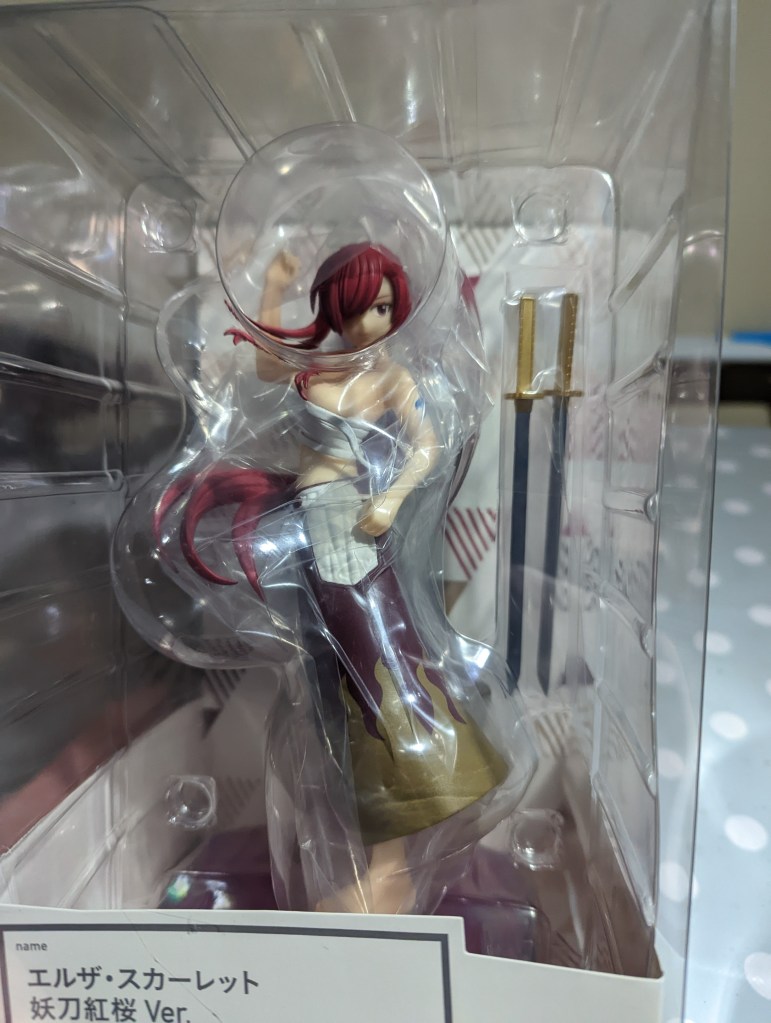
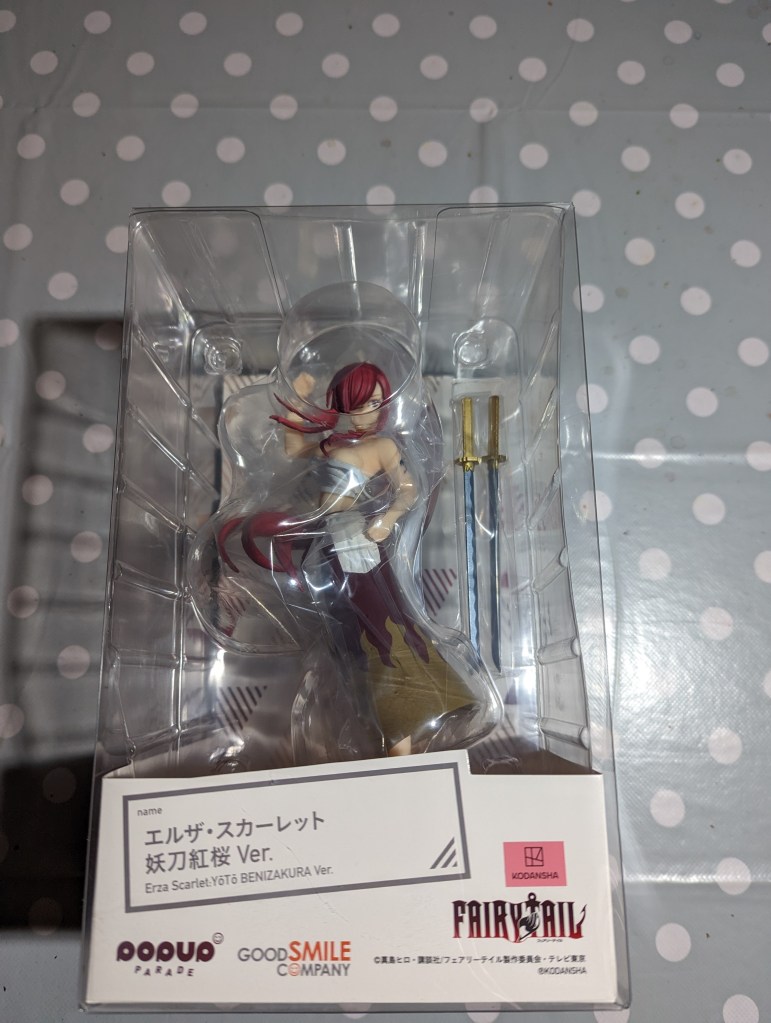
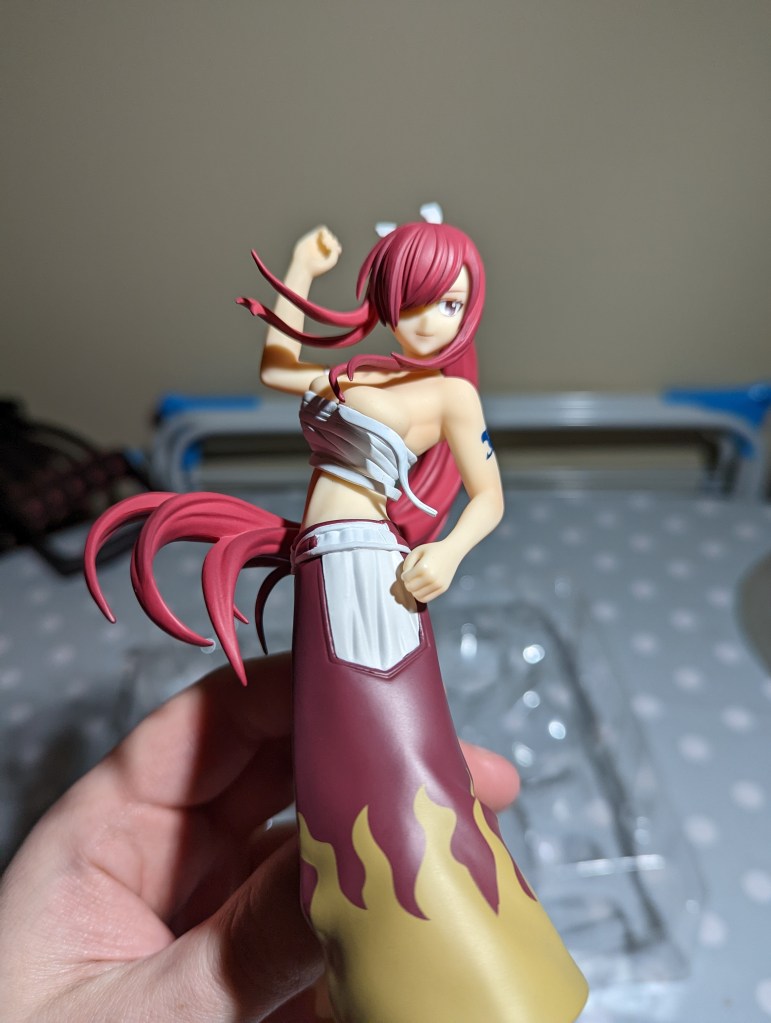
Long-time followers of this blog will know that I am a big fan of the anime Fairy Tail and that my favourite character in the show is the Queen of the Fairies; Erza Scarlett.  I like the character arc that she has and whilst the fan service in her design is not always to my taste I do like the general design and idea of a sword mage.  I have looked at figures of her before, but they have either been figma type figures which I dislike or out of my price range.  So, when a new one was released by Good Smile Company then I jumped at the chance. 

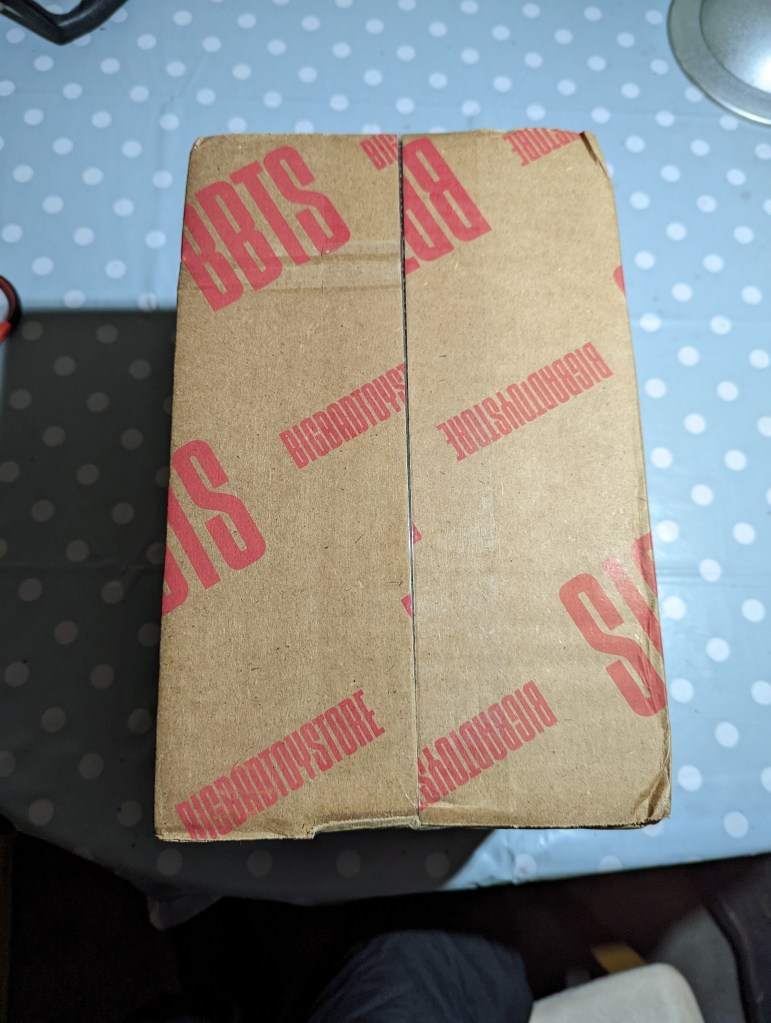
Now a fair chunk of time passed between the pre-order and despatch from BigBadToyStore.com and this, coupled with the crappy exchange rate, meant that the figure ended up costing close to £60 including postage which was more than I had planned but that’s the world we live in these days.

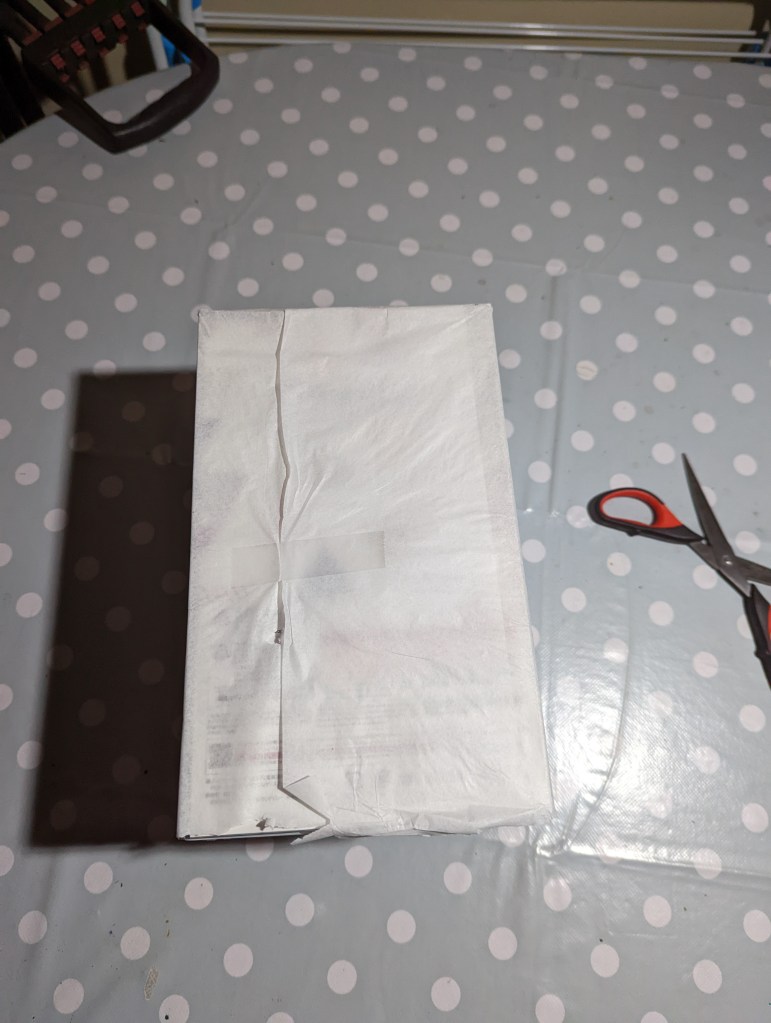
So, the usual BigBadToyStory packaging and I have to praise them for not doing the amazon trick of using boxes far too big for the item.  Just big enough for the item box and the bubble wrap but this time there was also a wrap of tissue paper around the box which is not something I’ve had on other figures from them.

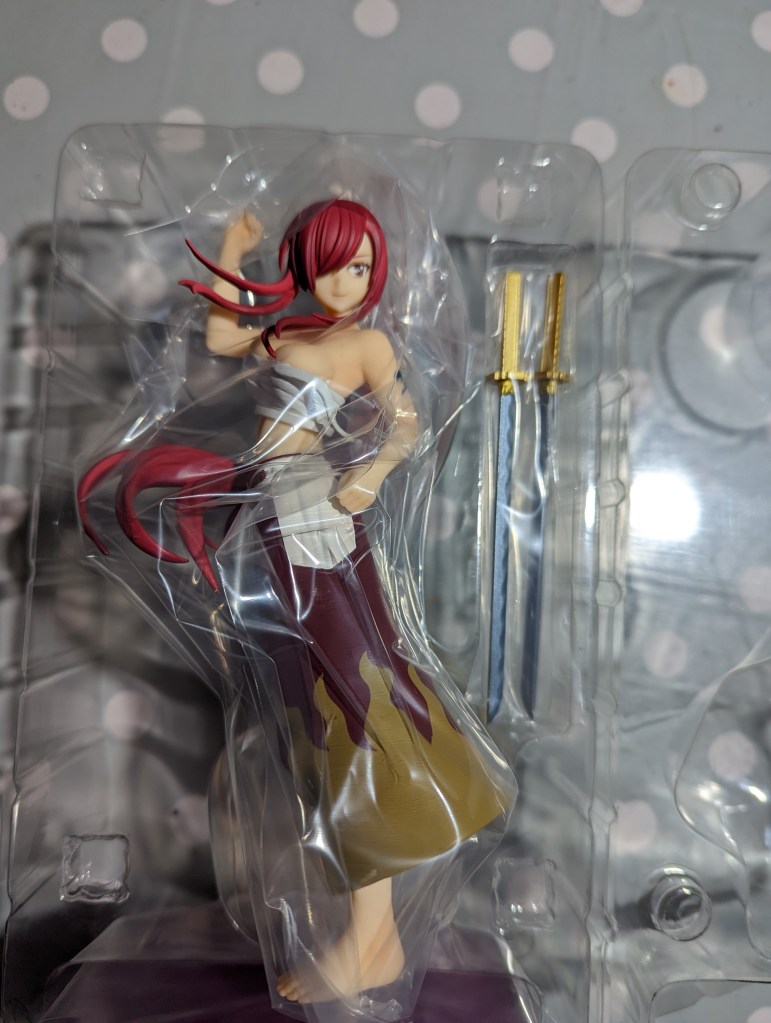
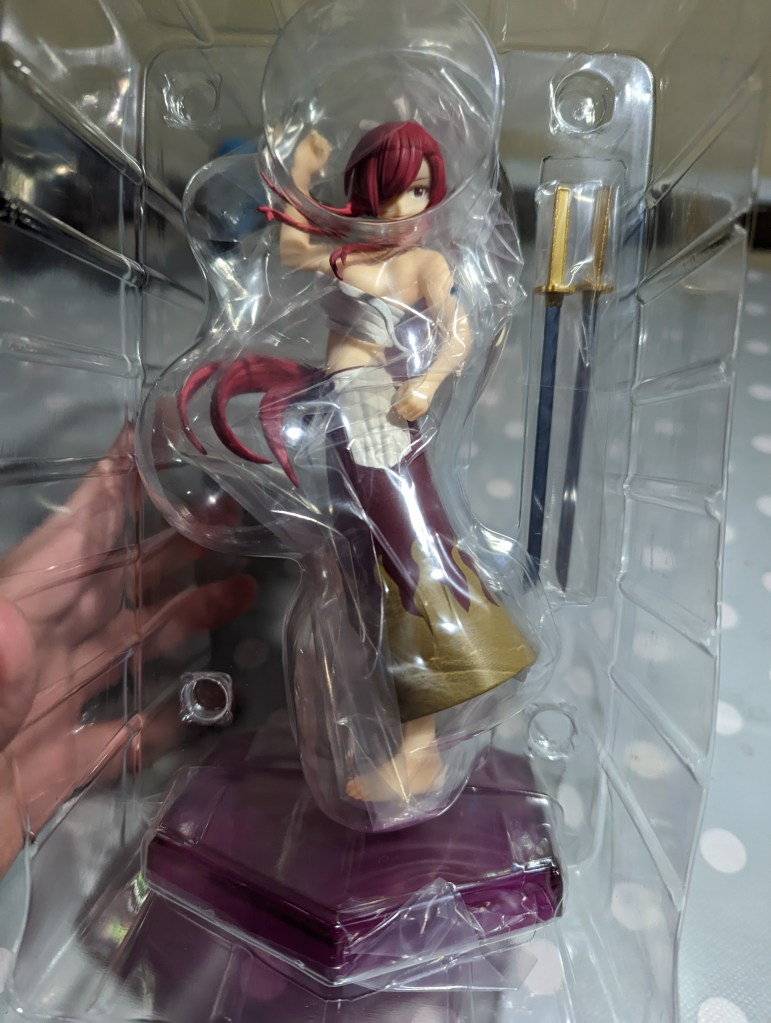
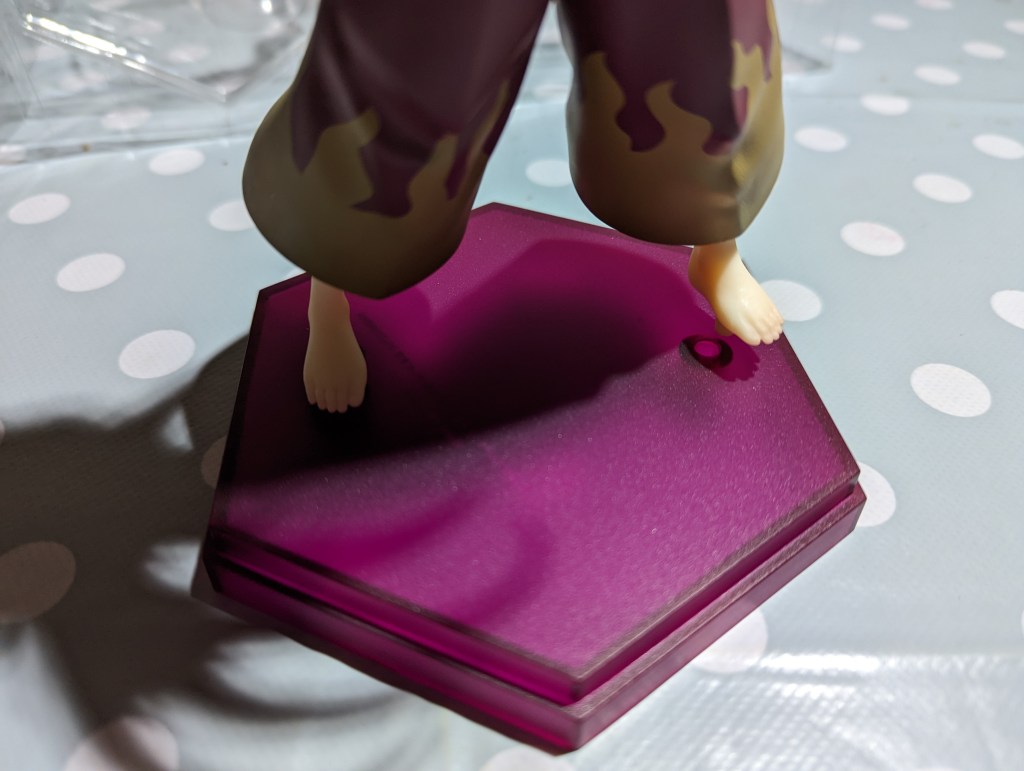
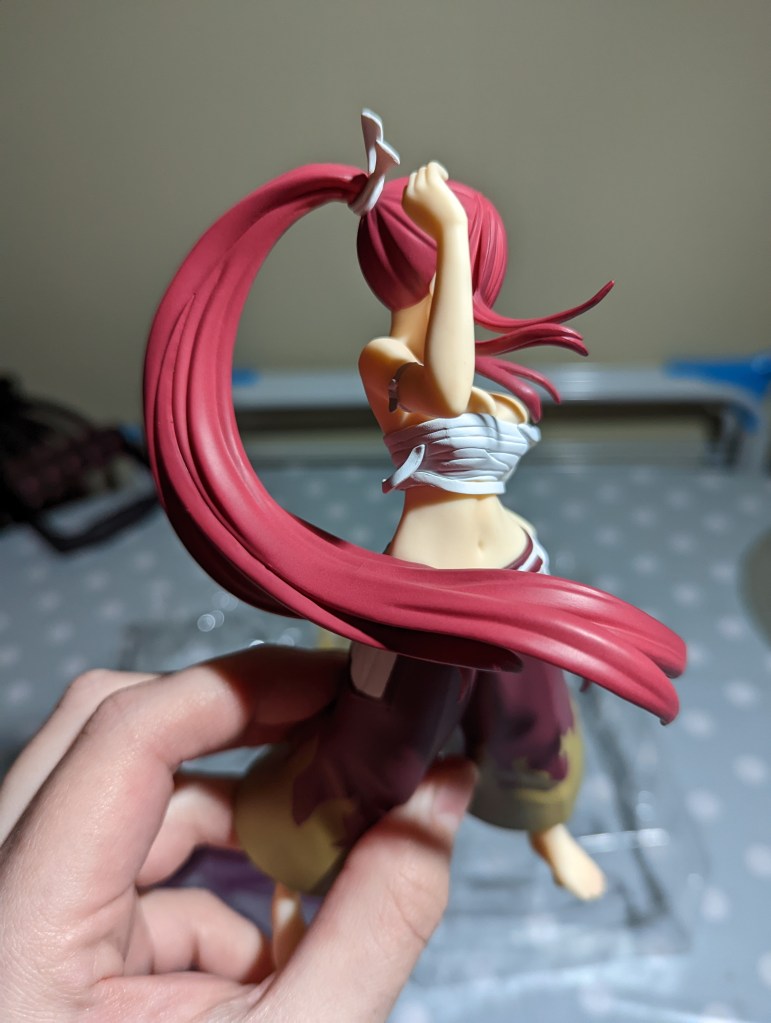
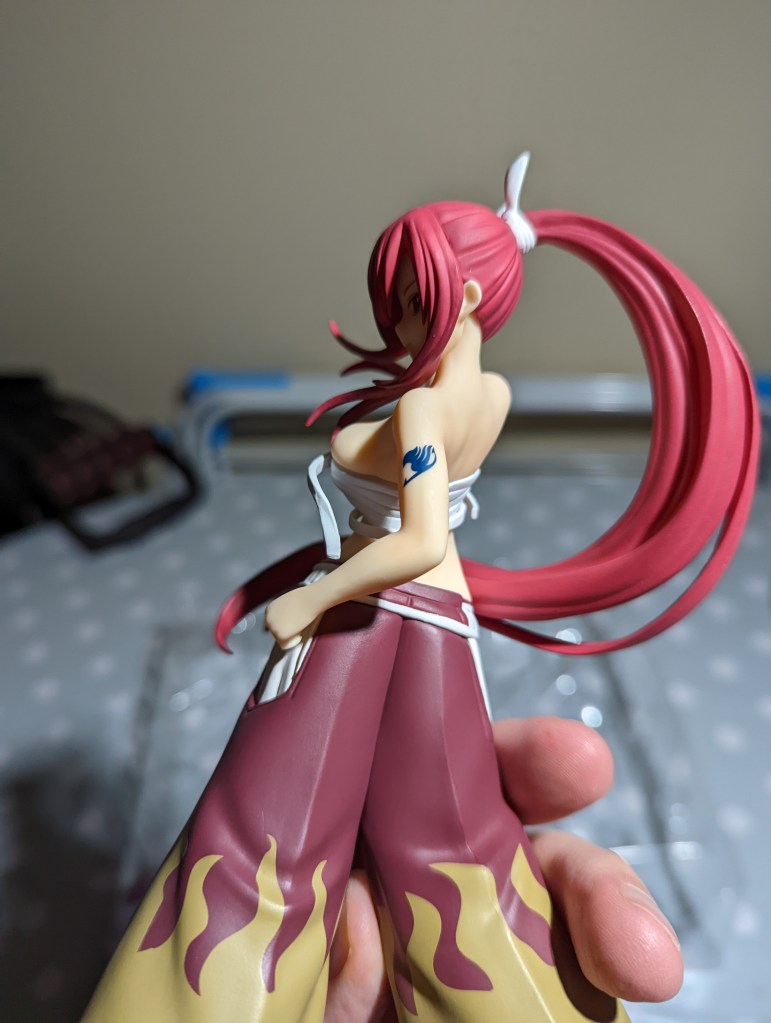
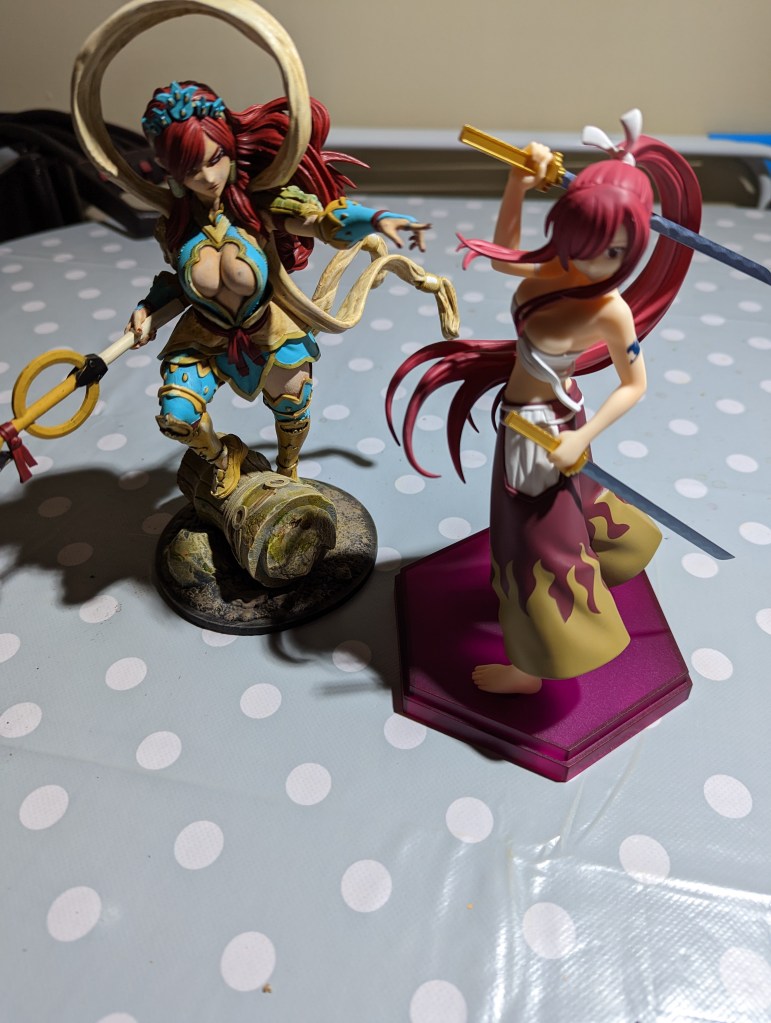
Erza is nicely packaged and even through all of the plastic packaging it was clear that this is a decent quality figure with plenty of detail.  Other figures in this price range have, in my experience, not been quite detailed but here the first impressions were solid.  The usual game of find the tape and the plastic was opened up.  The figure is cast in a single piece with a separate piece of plastic for the base and two swords.  The figure had a fair chunk of detail though the flame motif on the pants is a little darker than I expected.  The only criticism is that one of her bangs is a little rough when coming out of the top of the head. Not really a problem but it could have been moulded a little better.

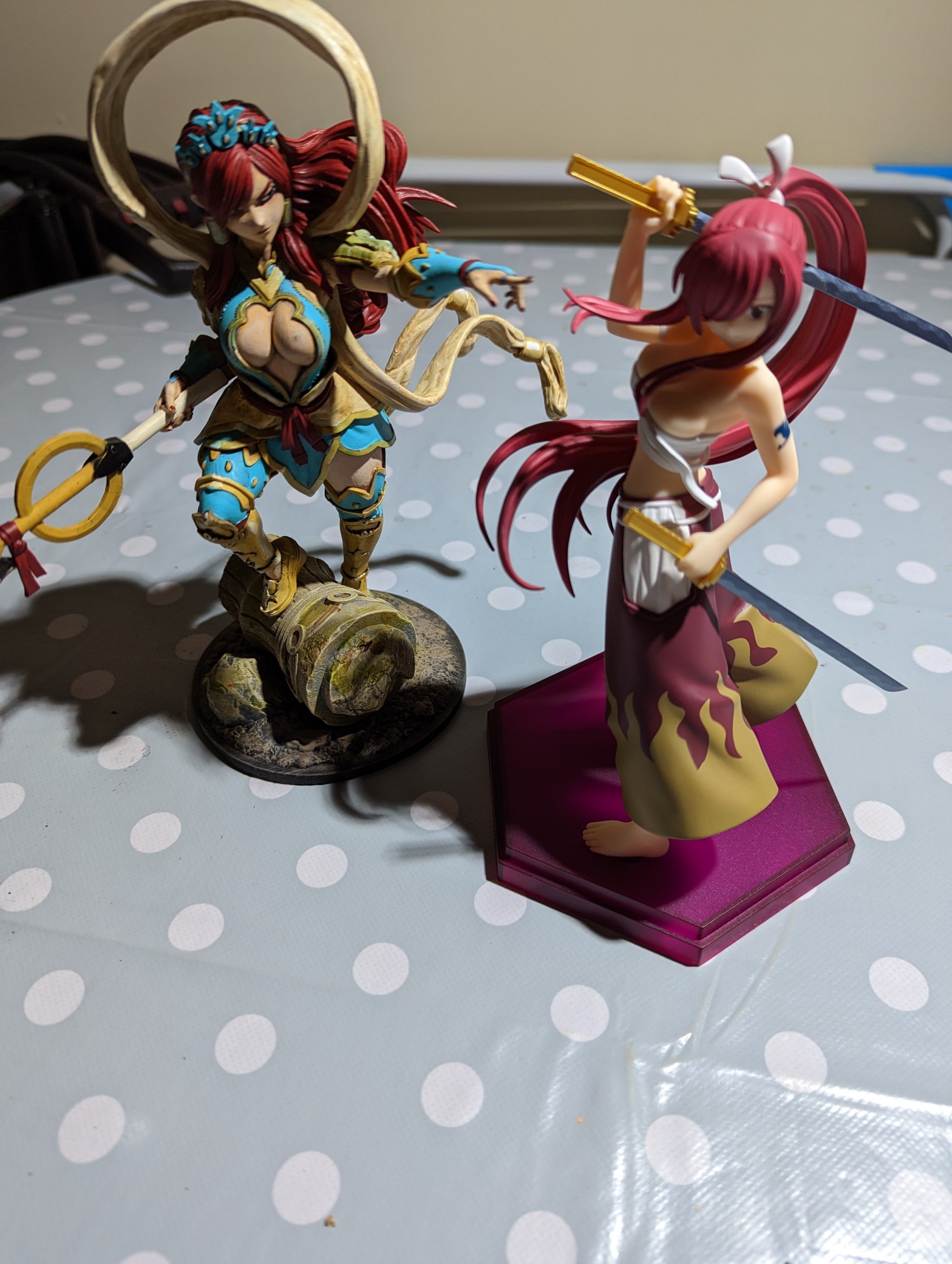
Was a bit of a struggle to mount her on the base as the holes are slightly too close together and the figure’s legs are quite rigid.  Was a bit of a hold breath and press gently moment but they did eventually go on.  The sword blades have a nice bit of detail on them, but the pommels are quite basic.  They slide into the hands with a little bit of pressure and seem solid and once in the figure is assembled.

Size wise she matches well with the 150mm figure of Erza in one of her other armours that I spent a month painting earlier this year and for the price it looks good.  Enough detail to work and for the price I am more than happy with the product.  Not sure if I would get other Fairy Tale figures but would certainly look out for the Good Smile Company in the future.

Design a site like this with WordPress.com
Get started