So, after a rather successful launch and a massive amount of vitriol; the noise around Diablo immortal has started to die down. Not the hatred of it by any means, but the endless coverage on social media Twitch and YouTube has finally started to subside. Though the recent delay of it’s China release may bring it back to the fore. It’s not really a surprise that it has dropped off the front page as pretty much everything that could be said has been said and most agree that the game is a psychologically driven exercise in driving people to spend money. Whilst Diablo Immortal is taking the psychological monetization to unknown levels, I have been genuinely surprised by the lack of awareness about just how psychological games design and marketing actually is. There is nothing new in Diablo (in psychological terms) all that is new is the extent and layering but the basic principles are the same.
Let me expand on that a bit and to do that we need to go back to the late 80s and early 90s. We also need to step away from the games industry and look at the music industry. So if you think back to the late 80s and early 90s, the main forms of music were on vinyl records and cassette. Vinyl was still dominant in the market with CDs another few years away. So whenever you went into a record store, and if you still do go into record stores, you’ll see that vinyl records are generally stacked, facing forward. There was a reason for this and that reason was the cover art.
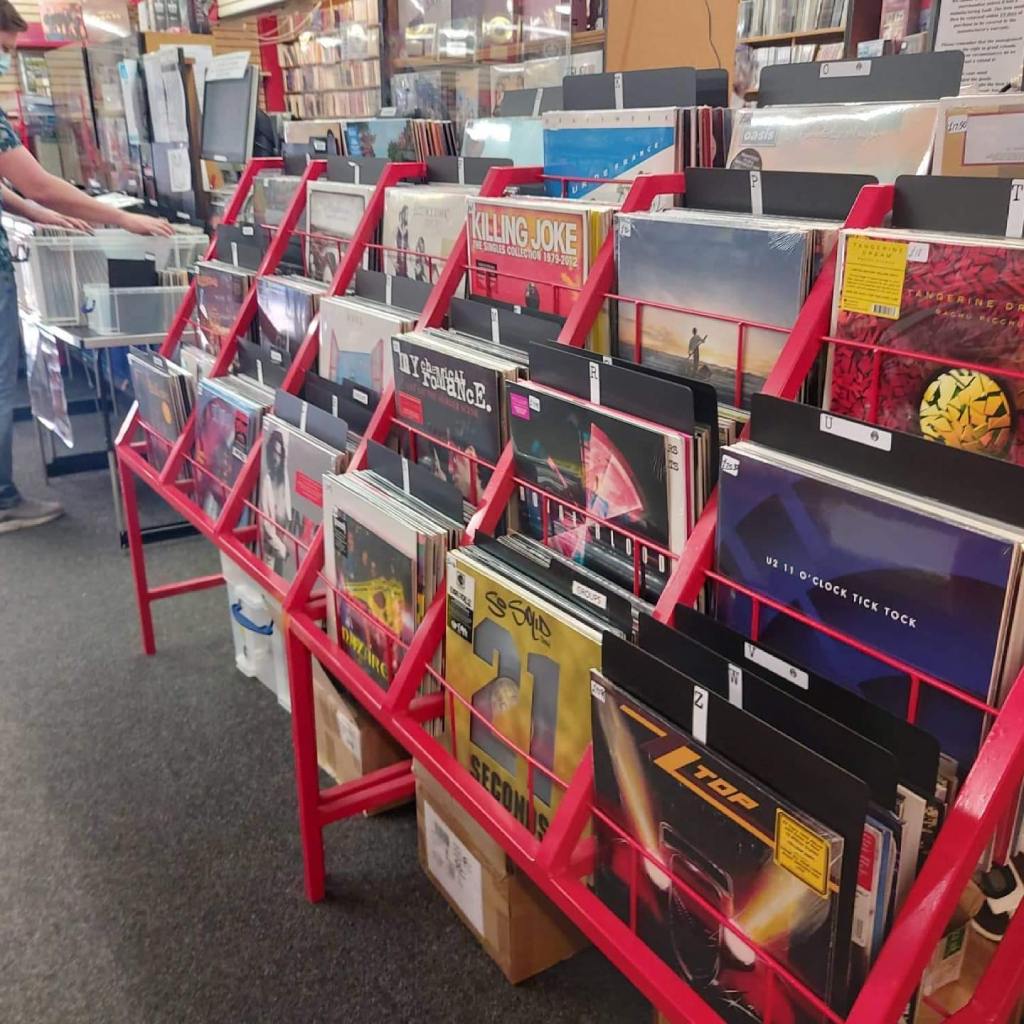
If you think about it, if you look at the spine of an LP, or CD or a cassette, you’ve basically got protects maybe in a bit of colour, but that’s all you’ve got. Now that’s fine if you’re selling a record that is by an established artist that people want to buy, they’ve gone into the shop expressly to look for it. But what about those that are just browsing those casual customers they’re not going to be taken in by a title or some coloured font. And this is where the art came in. That art was what caught the eye. It’s was also a degree of commentary about the band which is why the ones from groups such as Iron Maiden, were the way that they were.
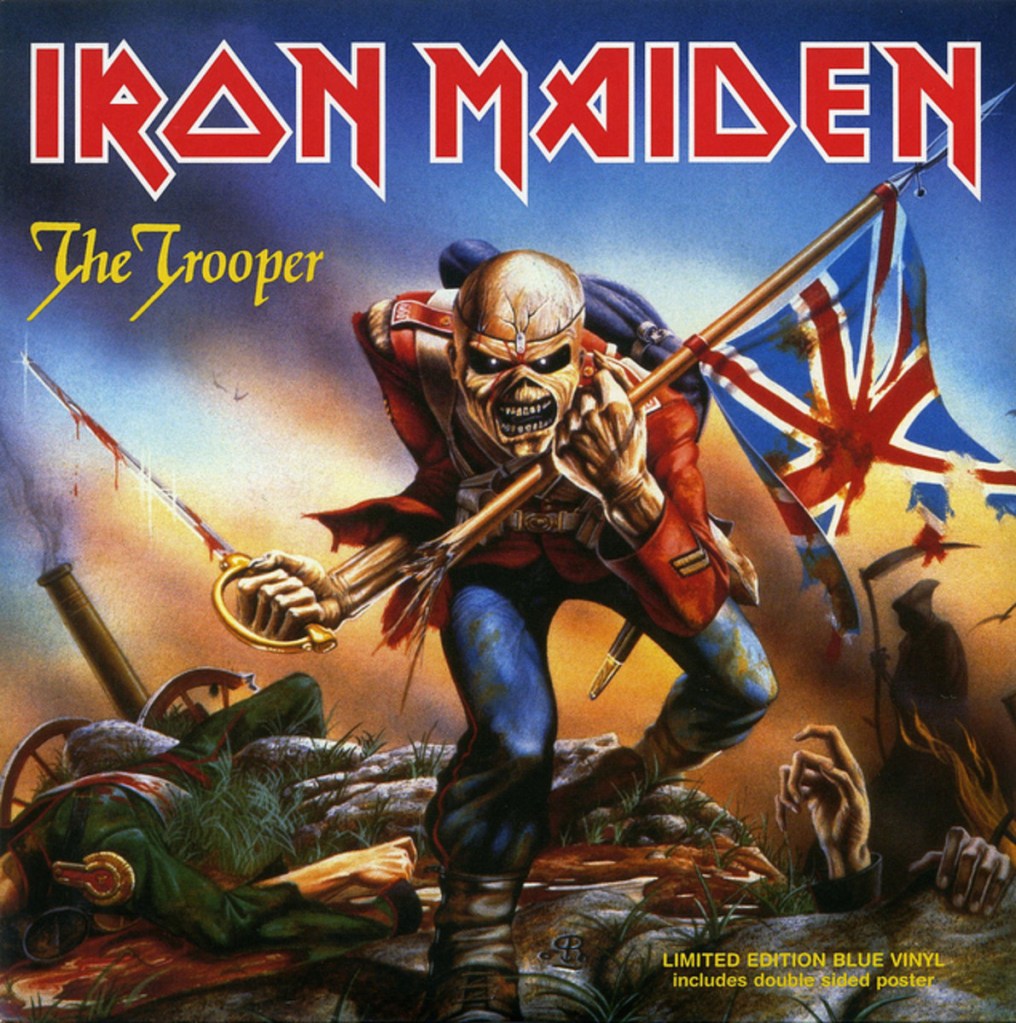
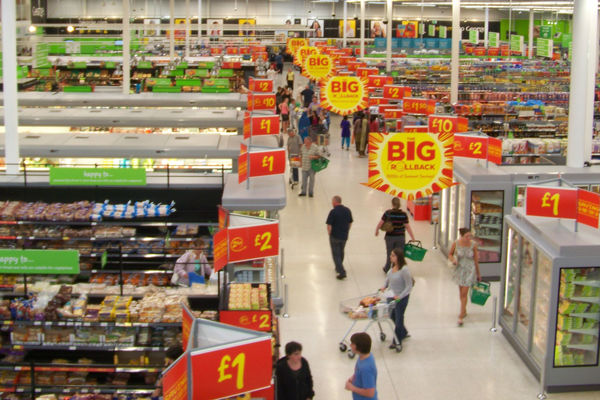
Yes it was to give an image of the artist but the fundamental principle was that good artwork would catch the eye. That trend continued with CDs. They would be largely displayed case forward so that when you were flicking through the shelves the thing you saw would be the image and that would be how they try and lure you in. It was psychological. It was trying to trigger a reaction in your brain to say, “that looks interesting” or “that looks different” and by stand out you were more likely to pick it up. This is the key moment because at the point when you’ve picked it up, you are statistically more likely to buy the item. It stands to reason the positioning of the item also plays a massive part. This applies to all elements of retail. There is a reason why when you go to your local supermarket, the established premium brand is at eye level. It’s not because that’s necessarily the best selling brand, but it’s because it’s the brand of the supermarket wants you to buy. It ‘s put in a position where you cannot miss it. It’s easy to see it’s easy to reach. Even the height of many shelves in supermarkets is designed for a reason. It’s designed to sit at the eyeline of the average person and the premium item is listed there. There is a nice piece at the below which is worth a look on this.
https://www.bbc.co.uk/food/articles/how_supermarkets_tempt
It’s the same in clothes . From my own retail experience with Next I can remember that every week there would be a print off of the top 10 and top 50 sellers by department and hose statistics influenced where those items were placed in the store. The best selling items would if possible, be moved to the front of the store so they were the first thing that the customer saw when you walked in. If it wasn’t possible to put them at the front of the store, because it would look a bit daft putting the best selling jumper next to the best selling T shirts, then it would be displayed front on rather than side on and be the very first jumper that you would see. It was strategically positioned to reinforce its number one status. Again, it was psychological. It was the first thing that you would see and then it would statistically increase the likelihood of sales.
Of course it is not always that simple. There are some items supermarkets very much want you to buy but for social reasons or to discourage stock loss i.e. theft. they’re displayed in different positions. That’s why many supermarkets will often display alcohol towards the back are the far end of the store. They know these are things that people will come in to buy. So by making the customer walk a distance to get them they expose them to other items in the store. Likewise things like bread are often positioned away from the entrance in order to encourage you to walk through the store and the longer you are there then the more you will be tempted. Once you are in then you are subjected to subtle manipulation throughout as they try and encourage impulse buys. Those impulse buys are usually the items on the end of the aisle because you can’t really miss them. You have to walk past the end of the aisle. It’s a similar thing with the pricing stickers. Sales items in supermarkets are often not reduced that much apart from the end of life items but those price reductions that are done for a few weeks with big stickers emblazoned on them are done so for a reason. The colours are bright and they’re always positioned either on the end of an aisle or eye level to catch your attention. You pick them up, you see the price and statistically it increases the chances of the purchase; the rational part of you knows it is actually not that big a saving, or that you may not really need it but the rush of getting something for less kicks in.
Video games were no different. In the early 90s The main consoles were GameBoy, Game Gear MegaDrive, Master System and SNEs. Games were physical purchases in a shop, came in a box, and they all had artwork, all of which followed a general pattern. I do remember fondly the Megadrive and Game Gear artworks and they always achieved their goal of catching the eye when those items were on display on the shelves. There wasn’t the social media influencer trends then and the vast majority of children whom these games were aimed at, were not driven by trends, it was word of mouth in the playground. Games like pokemon gained traction because they became a vibe in the playground; word of mouth spread people wants to get in.
However, for the rest of the time, games developers and games marketers were relying on the cover art to grab the attention so bright, vibrant colours art, stirring, dynamic scenes were very much the norm. I always remember fondly the Altered Beast and Golden Axe covers
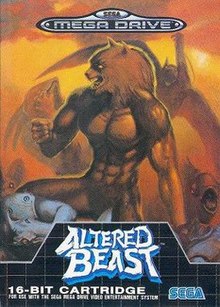
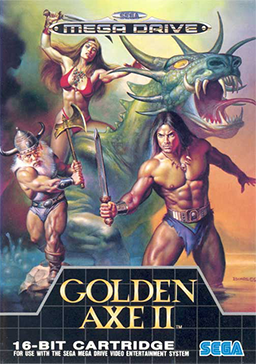
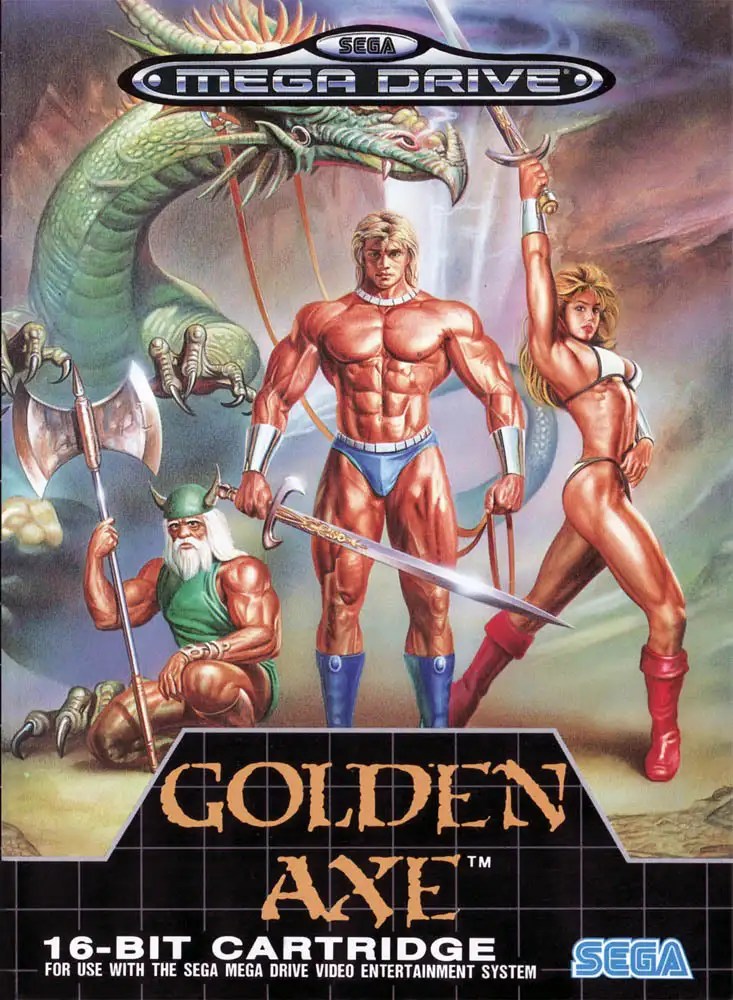
Both games design itself was psychological and whilst they were severely lacking in realism and playing to some pretty basic tropes they caught the eye and stirred the imagination. This stirring then would hopefully stir you into emptying your wallet. Character design was equally well versed in triggering that primaeval parts of the brain. Characters such as Sonic and Mario were designed in such a way as to be instantly recognisable and to trigger a response that these were familiar, safe and ‘good’. Likewise, some of the more scantily clad characters were triggering a different reaction. It was looking at the human brain, mainly male at that time, and triggering a reaction. The music was used to enhance the tension. Look at Sonic the Hedgehog. The underwater levels where you start to run out of air and the music increases.

That is a psychological ploy to increase tension and also drive you to distraction (and also grow a deep abiding hatred of that piece of music). Boss Fights would have their own distinct bits of music to signify that this was something different, and it was all there to do the endorphins and adrenaline triggers. Nothing in game design was left to chance and it still isn’t; what has changed is how games now need to be marketed and this is a reflected situation in the music industry.
We’ve so many items now being purchased digitally and not hardcopy. How you market them is different. Cover art is slightly less relevant now because you by and large don’t see it. You’re looking at a tiny image on the screen. Instead it’s the opening art cinematic video or the trailer video that is used to catch your attention. It’s always a pre rendered video cinematic cutscenes showing a great bit of action or the very best that the game could be. Often, it’s not even close to how the game actually is but that doesn’t matter. The psychological lure is put out using the trailer and music is similar. There was an article recently how a majority of Spotify songs are done in a certain time. The reason for that is that they will be instantly catchable a person will listen to the first few beats and be hooked. Gone are the days where you have songs that don’t really get going to the second or third minute because now it needs to be in the first two or three seconds. This is why albums generally front load those tracks to the beginning and leave slower, longer tracks to the end.
It is fair to say though, that psychology of game design has evolved a long way; it’s no longer just a case of putting in a bit of music to get the adrenaline going or chucking in a character design designed to stir the emotional element of the sexual fantasy of the player (though there is no shortage of that).
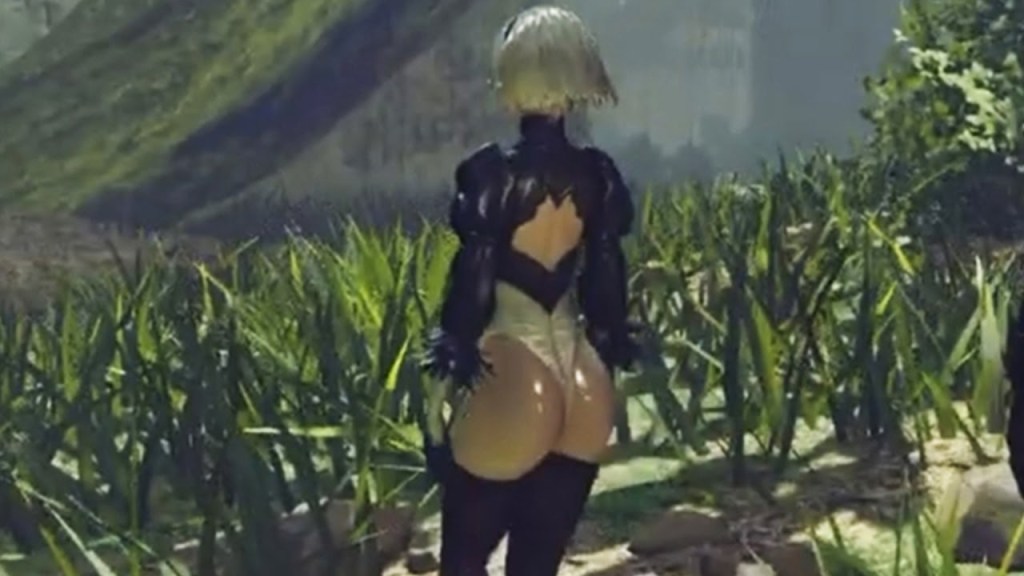
Now it is much more about the psychology of immersion but also the psychology of frustration. The idea of games as a service had developed because there is now the facility to constantly update the game and this has changed the market massively. You are no longer in a position as a games designer of having to launch the full game and that’s it on a cartridge or a disc. You can now release the game and then release seasons, further updates, skins and add-ons and monetize all of it in a way that was simply not possible before. But that needs a slightly different psychological approach. Let me illustrate that with an example. And the example I’m going to use is from my own experience with the game Tales of Arise. Now this is my favourite JRPG of all time. I would argue it’s probably one of the best JRPGs in the last couple of years. It does not have a microtransactions shop per se, but you can buy a small number of experience boosts, cash boost, and item boosts from the Xbox store (I was playing the xbox version but the same things are on all platforms). Now cosmetics are different so I’m going to leave them to one side for the moment and just focus purely on the xp element. So I was playing the game and really enjoying it. Doing a little bit of grind as I went along and explored but not really spending hours and hours and hours grinding. The story was fantastic. It had me absolutely hooked and then I reached a boss fight and got absolutely wrecked. Now, there were no recommended levels for the boss and I’d been levelling quite nicely and had been coping quite comfortably with all of the encounters, but the difficulty spike had gone up. So I did what all RPG players do ground a few levels. Try it again. Didn’t get wrecked this time, but still wasn’t even close to winning and I had put on about five levels, but still was not close. I really wanted to get on with the story because I was enjoying it so much. So what I did was go to the item shop and for a pound that was a 10 level booster. So I bought it and I beat the next boss; it was still not easy or a comfortable win, but I beat it.
It could be argued that the issue was caused by my lack of grinding, my level of gameplay skill or anything else. But there was a difficulty spike there and it was triggering a frustration in me; the frustration not that I couldn’t beat the boss but I was going to have to delay enjoying this story. Now I’m going to write a bit more detail about the problem with RPGs in another article. But that difficulty spike had triggered a psychological reaction in me. I wanted to enjoy the rest of the story and I couldn’t because I couldn’t beat the boss. So I was either forced to grind for a heck of a long time or make the purchase. So I made the purchase and that was on me; but when I did I couldn’t help but notice that subsequent level boosts increased in price. The first one had been a pound the second one was three, the next one was five. You could only buy those three in the defence of the game. Now as it turned out, I didn’t actually need to buy any of the other level boosts because I was a bit wiser and a bit more savvy and ground more as I went. A couple of the boss fights got close, but I didn’t want to drop any more money on it so I was okay. I would say though that those difficulty spikes were not by accident. They were by design and the intention was very, very clear. We will force the user into a choice to either play our game for a vastly longer period than they perhaps want, a bit of a kind of time sunk fallacy or we will say if you don’t want to sink more time into it than you need or want to then here’s the cash shop.
This was a very very simple thing from a design point of view, but it illustrates the point perfectly. The scaling of those bosses was psychological as much as anything else. It was applied to basically force the user to either spend more time in the game, which is obviously good for statistics, or spend time in the cash shop which is good for the sales figures.
So this brings us back round to Diablo. Diablo has pretty much every monetization gig going. It has time gating, it has limited items, it has level capping, it has difficulty spikes, and it has grind limitations. It also has items that simply cannot be obtained by free to play. But none of this is new. Given time, I could probably point to pretty much any game in the last five years, particularly mobile games, as an example of where those limitations came in, because the digital marketplace has allowed for digital transactions and near enough instantaneous updates in the game. Those weren’t possible in the pre digital era because you went and bought the game and that was it. Unless you got the cheat code of course. Nothing will change in the games market unless the players want it to change. The problem here is many players don’t want it to change. Whales greatly enjoy spending money to be top of the tree and being able to flex all the fancy items and extra things they’ve got. Many free to play players don’t care because they play the game for a bit, they enjoy it and they move on. This time Diablo has triggered a very different psychological reaction in the wider gaming community than its own internal mechanisms would have intended.
There is a much more unified feeling of disgust at the exploitation of the player this time because Diablo has taken those psychological cues and arguably it moved it into the realm of psychological abuse. They are playing on players, no pun intended, on every conceivable front. It’s not just the case of displaying the fancy box graphic to get you to buy something. It’s now pushing the box graphic into your face as soon as you walk through the door. It’s that behaviour that so many people hate in a supermarket, or shop when you are pounced upon by a member of staff asking if you want help the moment you arrive. Many shops have stopped doing that because customer feedback said it was shit and they did not want it. It is unlikely that this is going to change indeed, I’ve read that Diablo four is actively recruiting people of with expertise in psychology to aid in the cash shop designed for the new Diablo Four. At the moment they’re stressing that it will be for cosmetics only but given that this is Blizzard and the vast sums of money that Immortal stands to and indeed has already made; the odds of that promise being capped are frankly minimal.
There’s not a great deal for games and whilst plenty have condemned what is happening; there will always be people who want that endorphin rush, who want the flex or who simply fell into the trap that I did of wanting to get on with the story. They’re not prepared to walk away from a game; particularly if they bought it and not played it on Game Pass simply because of that gate. It’s a time and cost sunk fallacy but it’s a strong one. Unless all gamers unite to change it, then things will not change and we will continue to have this microtransaction manipulation.
So to sum it all up, whilst Diablo immortal is undoubtedly the worst of the breed. It is not the first of the breed. It is only the breed taken to its maximum current extension. And whilst hopefully the extension goes no further I have a horrible feeling that it will and these kinds of games will most definitely become more prevalent. But I’d be interested in hearing what your views are on the psychology of gaming and particular little ploys and tricks in games that you’ve come across or seen. Drop a comment below or feel free to subscribe to the site and as always, I hope everyone is keeping safe and well and I will catch up with you next time.
 Roll 3's to hit