If you have any interest in gaming then it is impossible to avoid mention of crypto and NFTs these days. Games are being built with built in crypto farming and NFT (though I do use the term game loosely in reference to things like Earth2) whilst big studios like Square Enix are open in admitting they are looking at this area. For most gamers though the whole idea, especially using NFTs, is abhorrent and they are vocal on that. Despite that though the idea refuses to go away. The question therefore is are these things the future or a living proof that a fool and their money are soon parted?
Crypto
I think it is important to treat crypto and NFT as different things and recognise that they are not inextricably linked. NFTs have the greater dependency on crypto though but the same is not true in reverse.
Crypto currencies have been around for a while and some, such as bitcoin, have made some people extremely wealthy. It has also made others extremely poor and there are worrying questions about the environmental cost of such currencies. Before looking in a bit more depth though it is perhaps worth explaining at a basic level how ‘normal’ banking works. To do that we will use Bob, Jeff and Dave. All three of them go to Sparkles bank and hand over £1000.00 each with the intention of the bank storing it until they need it and paying interest on it each year. They don’t touch it and Sparkles is custodian of that money. A week later Alan comes in and asks for a loan to set up his new business and asks for £1500.00. Sparkles agrees and hands over £1500.00 from the £3000.00 that Bob, Jeff and Dave deposited with the understanding that repayments will be made monthly at £100.00 per month and interest will be paid on top. Essentially Alan will repay a larger sum than he borrowed by the time he pays the loan back. This extra money will be used to pay the interest on the £1000.00 deposits that Bob, Jeff and Dave made and also the bank profits. Now this is a very simplified view but writ large is how banking works. Sparkles in this example has held some money back and when combined with what it holds from other investors it has a liquidity pool. The idea being that if Bob, Jeff and Dave all want to withdraw their £1000.00 plus accrued interest then the liquidity pool will cover the deposit; even if Alan has not fully repaid the loan. It is easy to see the problem with this because if everyone pulls money out before loans are repaid then the liquidity pool is too small and you have what is known as a run on the bank. In that situation a bank can fail unless the state steps in and helps (or it loans money to cover the shortfall). This happened with Northern Rock bank and is a large part of the last banking crash; there was not enough coming back in from loans to cover the money being demanded. With a physical currency though the saver is protected by the state (though few currencies are backed by gold now) in the UK anyway, up to the sum of £85,000.00 and there is legislation, oversight and control to minimise the risk of issues and people loosing everything.
Crypto currencies are slightly different and come about in a couple of different ways; but usually it goes something like this. Bob, Jeff and Dave are approached by Sparkles with an offer to buy its new crypto coin. Lets call it ‘shine’. They have heard that you can get rich from crypto so put in £1000.00 each and this gets them 500 shine each. An exchange of 2 shine to 1 pound. At this point they have nothing tangible but they could maybe use the shine to buy a digital item (such as an NFT) but other than that it is not really useful. As crypto is not really loaned out or accepted as full legal tender it is not as widely traded as say sterling or dollars. So it has no inherent method of earning Bob, Jeff and Dave money. The media though has got wind of shine and due to a bit of influencer marketing its value rockets and now it would cost £10 per shine coin. This however is a nominal value however because the liquidity pool of the original £1000.00 from each of the investors has not changed. Along comes Alan. Alan wants to get into Shine so offers Bob £10 per coin he has. He accepts and the money is paid to him and he makes a nice profit on his £1000.00. This spirals a bit and shine is now worth £100.00 per shine coin and things are looking good for Jeff and Dave but then, some bad publicity and the price crashes. No one wants to buy into Shine from the outside so Jeff cuts his losses and pulls out. He sells his shine back to Sparkle for £50.00 per shine. He’s made a profit of course but it was a close run thing. Dave however doesn’t sell and thinks it will improve. The price continues to fall because there is a criminal investigation into Sparkle and now Dave finds that his coin is worth £1.50 per coin. Deciding he has had enough he tries to pull out and sell the coin back. The problem? When people like Jeff pulled out they drained the liquidity pool and Sparkle had been taking their cut as well. Now there is not actually the money left to pay out anything and now Dave is stuck. Sparkle vanish without a trace and the currency is basically dead. Dave approaches the authorities for help and is told that there is nothing they can do and he has lost his £1000.00 for ever.
The above is a super simplified version of things but it highlights the basic issue I have with a crypto based currency. Its inherent value comes from scarcity and people wanting to buy in. Supply and demand drives the price but if anything dents the desire to buy in then the whole thing collapses. The recent crypto market collapse is proof of the volatility and if you get an unscrupulous coin minter or an insufficient liquidity pool then it is good bye investment. And the authorities will simply not care as it is outside their remit. Factor in the massive ease with which it can be used to launder money then the whole area is a risk for most people. I have a friend who did invest in bitcoin early on and she told me that the stress of waking up each money to check the value was so bad it made her ill. She cashed out and made a decent profit but her recounting of having to set alerts to check the value put me off for life.
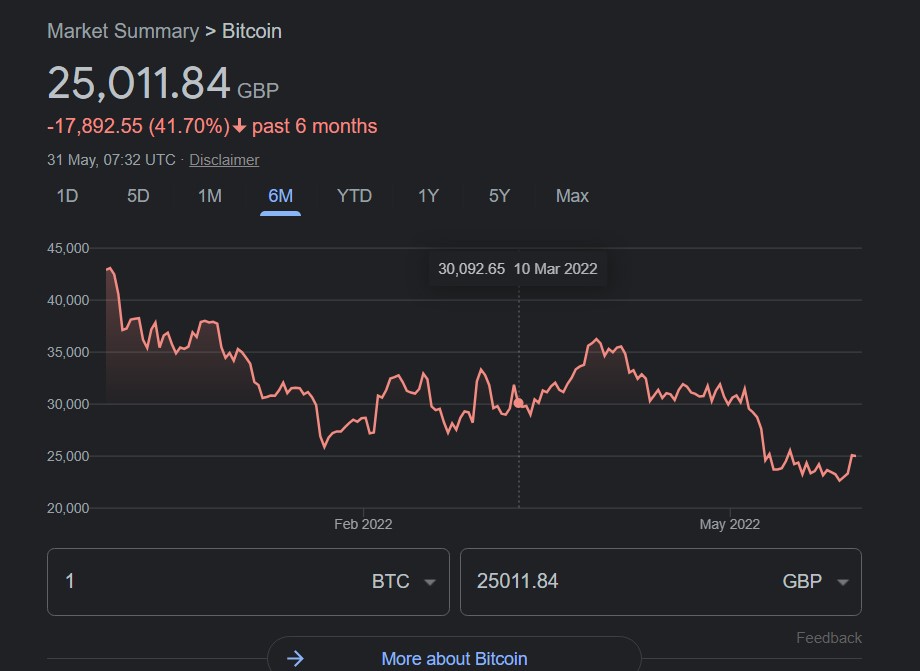
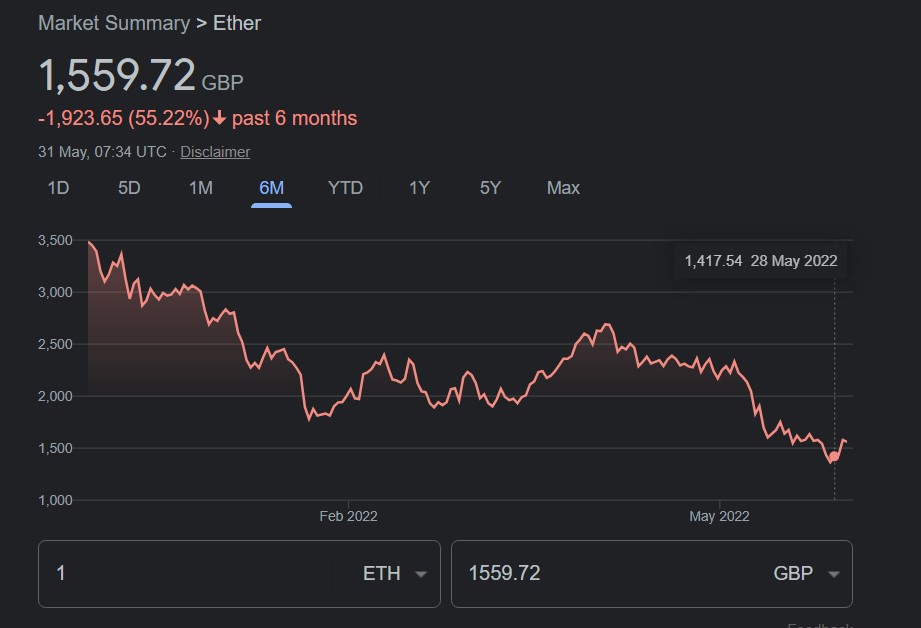
Now I am not necessarily against the idea of a digital only currency but the massive exposure it gives to financial crime and rogue operators, coupled with the lack of regulation and protection makes it a huge gamble. Any investment is a gamble but at least with traditional stocks and shares there is regulation in place to at least give a modicum of cover. You can still loose your shirt but there is the possibility of legal action, state intervention etc. Eventually I can see these coins becoming regulated and more centralised given the recent spate of fraudulent actions and that may change my view on the risk. So why then are so many game studios looking to bring it in? Well firstly it is news and any publicity is, as the saying goes, good publicity. Jump on the crypto train and you are guaranteed exposure in the news and exposure drives sales (unless your fan base goes nuclear as happened with Team17). Second and perhaps rather cynically is the fact that these currencies are not regulated. No regulation means a chance for more profit with none of the risk and by having the end user do the ‘mining’ then the owner is cutting their own cost but making a nice fat profit. Low risk, high reward. What’s not to like for them.
Ultimately I think crypto is here to stay though I suspect its encroaching in mainstream gaming will be limited for many years. People don’t want to have to work at play to earn games; that’s called having a job so the idea will fail on the whole. There is though legitimate value in decentralised cross border currency (no exchange rates when using it in different states etc) and these mean, at least in my view, that the core idea is not a fundamental screw up. NFT’s though are a very different proposition.
NFT
So whilst crypto-currency is in many ways a riskier version of gambling; at its core it remains fundamentally a valid piece of technology. It may have some inherent flaws but is not irredeemable. NFT’s on the other hand are plain bat shit crazy.
It’s very difficult to explain what an NFT is to a person who doesn’t really get involved in the sphere. It’s easier to give an example. Though be warned, the example will make your brain hurt. It makes my brain hurt just talking about the stupid things.
We’ll use our previous group of people and we’re going to focus on Dave. Dave is a digital artist. Dave spends a bit of time and draws a fantastic image of a woman in a red dress and he makes people aware of it and people say, “Oh, that’s really really good, but I would prefer to dress in blue or grey, yellow, pink, white” Now, because of how Dave did the drawing he was easily able to change the colour. So instead of one image, he now has several. Dave decides he wants to make a bit of money from his images, and why not? He’s talented and they look really good. Spoiler alert at this stage most NFT’s do not look really good, but it works for this example. So Dave considers setting up a Patreon where he sends out images monthly, but that’s a fair bit of work. And if he’s honest, he does it as a hobby. He doesn’t want to be tied to a schedule. He has a normal 9-5 job so doesn’t really have the time. So somebody suggests to him that he mint an NFT. So he goes to one of the NFT sellers like OpenSea, pays a small fee and he mints the image.
He mints all of the images and the only difference is the colour of the dress. He pays his nominal fee and these are now NFT’s and they can be bought either in crypto or in dollars. Dave has a bit of a following on social media and he says that he’s done this and he posts a link to the site. So what happens is somebody comes along and they buy one of the NFT’s. What is important at this point is to remember that they have not bought the image. The original image sets in the hard disk on Dave’s computer or the cloud or wherever he keeps his storage. What the seller has bought is a a string of letters and numbers. And that string corresponds to where the minted NFT lives on the blockchain or the cloud. Blockchain is a bit of a obscure concept so I’m simplifying. So they don’t own the image. I’m serious. What they own is a collection of letters and numbers that point to where that image is stored. Now in theory, only they have that mix of letters and numbers. In theory. If that central location were to disappear, or be deleted, be moved, or any other of the anomalies that can happen with digital and cloud based storage; then that’s sequence of letters and numbers becomes worthless. But Dave doesn’t care. Not because He’s heartless or anything as far as he’s concerned. He’s put it up for sale. Somebody’s bought it and he’s got his money. So Dave’s quite happy. It’s Alan, we’re going to use as the person who’s bought the NFT. Now Alan decides that he wants to make a bit of money. So what he does is he puts the NFT back up for sale at 50% over the price he paid for it.
Along comes Bob and Bob buys from Alan. But there has still been no transfer of ownership or copyright of the original digital piece. That remains with Dave. All that has been sold is the collection of string data; the letters and numbers. That’s it. Nothing more. Nothing less. So right now, if you’ve not had experience of NFT’s you’re sat there thinking why that holy hell would somebody pay for this? It’s an excellent question and to date, I have yet to see a very good explanation of why anybody would do it short of FOMO or stupidity.
Well there is one other option of course and it tends to be the reality. A desire to get rich quick by scamming gullible idiots. You see in my example the situation was very benign, sensible and noble. Unfortunately, the reality is that a large number of NFT minting schemes are money laundering Ponzi schemes. In reality what happens is a computerised script is used to compile a number of visual assets. So different faces, different hats, different background colours; all the things that you’ll see on an image Run the script and it outputs completed compiled images. It’s become a bit of a meme, but the majority of the NFT’s you’ll see on articles are a chimp, smoking cigarette, and you’ll see with different background colours, different hats, different glasses, all sorts of differences. But this is what I mean about the large number of the NFT’s being visually crap. It takes seconds to do if you Know how to do it.
Now of course, most people don’t actually want an image of a smoking monkey. So what often happens is the person who’s minted the images, uses a different crypto wallet and purchases, his own NFT. This could go round and round a few times. He’s not actually spending any money technically because he’s paying himself. What this does is creates a sale activity on the blockchain. People see that this NFT is being bought and sold for increasing amounts. And in the crypto world this is a red rag to a bull. So quickly, people come in who are not the original minter buy it.
The original minter now promptly rubs his hands with glee because he’s now actually made his money and can now disappear. The buyer starts the cycle that we illustrated above with Alan, they sell it on and the price increases and increases up to a point where it reaches a natural plateau. It’s stupid, but it’s what happens.
But there’s an even more sinister side to this. For a start the amount of NFT’s that have been minted using stolen art is ridiculous. And I’m not meaning physically stolen as in broken into an art gallery and half inched it; that at least would have an element of excitement to it. I have followed countless digital artists on social media and many of them have said they’ve had their art stolen by the minters using right click and save as and then minted as an NFT without their consent. It’s fast, and the NFT minting sites like Open Sea have been extremely slow to deal with it. Indeed it’s questionable if they have dealt with it. Once the NFT is out there it is next to impossible for the digital artist to get the NFT taken down. And remember the person who has subsequently bought from the minter, unless they follow that digital artist, won’t know that they have essentially bought stolen goods. They have bought it in well, I’m going to say in good faith as there’s not a lot of good faith in the NFT market but they have bought it arguably not knowing it is stolen.
So it’s a great way for people who haven’t got the artistic talent to make money off the back of people who have and it has fucked over a large number of artists. Sadly, if that was the only sinister element it would be if not tolerable, at least understandable. However, there is a much much darker element with NFTs. NFT’s exist to make people money, and that’s fine. There are plenty of other real and digital assets that do that. But there’s only one way NFT can make money and that’s by attracting new people in it by to sell because this digital asset cannot appreciate because it has no inherent value because it’s not a physical thing. It’s not an object that exists. The digital image i.e the original has a value because the original artist still has it and if he or she becomes popular, then those kinds of digital files become valuable. And that makes sense. The original Mona Lisa may not have been worth a lot of money, but it’s now worth a lot of money because the artist is famous and the image has become famous. A collection of letters and numbers does not become famous. Because it’s a collection of letters and numbers that mean nothing and do nothing. It gives no visual reward. So for the crypto bros The only way they can make money is to sell on that NFT. That’s it and this is a massive massive problem. Because what it means is it’s a Ponzi scheme. The people at the top who start things off, get rich. The people who come in at the bottom lose out because there is no one else eventually to sell onto and the NFT sphere is littered with scams and people being done out of money.
I will be honest and say that the desire to own an NFT makes no sense to me. It’s just completely stupid. This is especially the case when most people who have a modicum of tech knowledge know these NFT’s that people brag about quite easily be stolen with a right click and save as. Now I don’t endorse that action and if you choose to do it, it’s totally on your head. It’s not illegal, but it doesn’t make you necessarily much better; though I do get the humour of doing it to crypto bro and arguably you actually get more for your click than the crypto bro gets.
I don’t understand for a minute why game studios want to be involved in this mess. I see nothing of any value from a game design perspective other than making the studio money. Of course it’s not just game studios; football clubs have got involved. Liverpool Football Club tried and didn’t do quite so well, which as a Manchester United fan was rather amusing. The only rationale I can think off is that it’s a blatant attempt to cash in on a buzzword.
Yet game studios seem determined to go down this idea Some have tried to link in with Metaverse ideas which are even more bat shit crazy than the NFT. But the backlash is growing. And it’s highly likely in the US soon that some of these NFT farmers are going to get their collars felt because it is a Ponzi scheme. And in the US Ponzi schemes are illegal. Likewise, the money that is being ripped off from people is leading to a backlash and I’ve seen that the NFT market recently has absolutely collapsed. You’ll forgive me if I don’t shed a tear. Studios such as Square Enix who are seriously looking at this are setting themselves up for a massive PR fall. Because as soon as one person gets scammed by a big company or a big companies product, the PR storm that will hit will be monumental.
So I started this blog with a question are crypto an NFT is a good thing a sensible thing or the example of a full on that money? I wouldn’t say crypto is a good thing. It has a huge environmental cost and there are problems. But as a technology there is a basic core that is valid. I can understand why people are looking at it. It’s a gamble. It’s not one that I personally would take as it doesn’t meet my investment strategy. But I understand why people do and I can accept it. The lack of regulation is a problem and the ease of abuse and criminality is a concern. But over time that may well be something that can be addressed however, NFT’s are the exact opposite. They are a scam. I can’t put it in any other way. Yes, some people go in with good intentions and are not intending to rip people off but they are in my opinion the minority. Too many people have now been scammed. There are too many Ponzi schemes floating around for it to be a good thing and if you do choose to go into the market and it explodes in your face? Well, I guess I told you so.
 Roll 3's to hit